Wine Region Murcia

There are 3 DO wine regions in Murcia:
- DO Jumilla
- DO Bullas
- DO Yecla
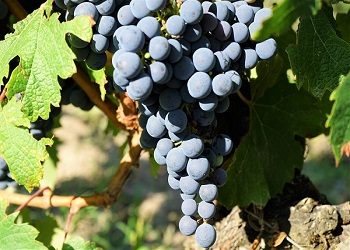
In Murcia the winemakers have started to focus on high-quality wines, primarily focused on Monastrell, which creates robust, fruit-driven red wines with high tannins and intense color.
Climate
Murcia combines both a coastal and continental climate. The climate is characterised by very hot summers.
By the Mediterranean Sea, the climate is cooler, wetter and more moderate.
In the inland, the sea breezes help to moderate the temperature.
There are occasional freezing winds from the mountains and frosts between October and April. The average temperature is 16 °C with maximums of 39 °C in summer and minimums of -4 °C in winter. There are also occasional violent storms in September and October.
DO Jumilla
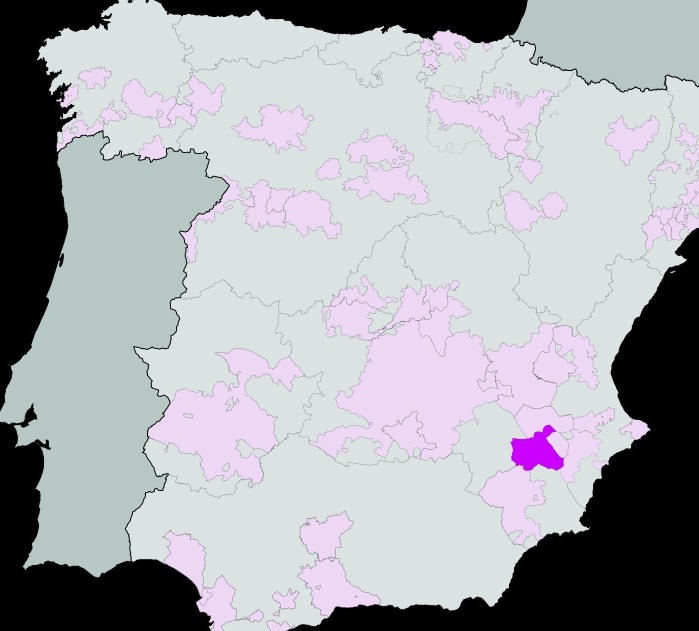
The DO Jumilla wine region spans both Murcia and Castile-La Mancha.
The region is famous for producing bold, full-bodied reds.
DO Jumilla is the historic home of the drought-resistant Monastrell grape (Mourvèdre), which thrives in the region's semi-arid, high-altitude vineyards to deliver concentrated berry flavors and excellent value.
The Wines
Monastrell
Accounts for about 80% of plantings. It produces dark, tannic, and fruit-forward red wines
with notes of blackberry, black cherry, and spice.
Blends & Varietals
While Monastrell is the star, the region also uses Syrah, Garnacha Tintorera (Alicante Bouschet),
Cabernet Sauvignon, and Merlot to craft complex blends.
Whites & Rosés
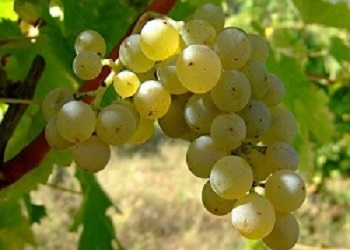
Though less common, the region produces crisp white wines and vibrant rosés,
primarily from the Monastrell, Airén, and Macabeo grapes.
Terroir & Climate
Extreme Climate
It features an extreme continental climate with hot, dry summers (up to 40° C) and cold winters,
tempered by high altitudes.
Elevated Vineyards
Vines sit at elevations between 400 and 800 meters, allowing for a wide day-to-night
temperature shift that balances the grapes' sugars and acids.
Soil
Soils are typically sandy over a limestone base, which retains precious underground
moisture despite the region's very low annual rainfall.
DO Bullas
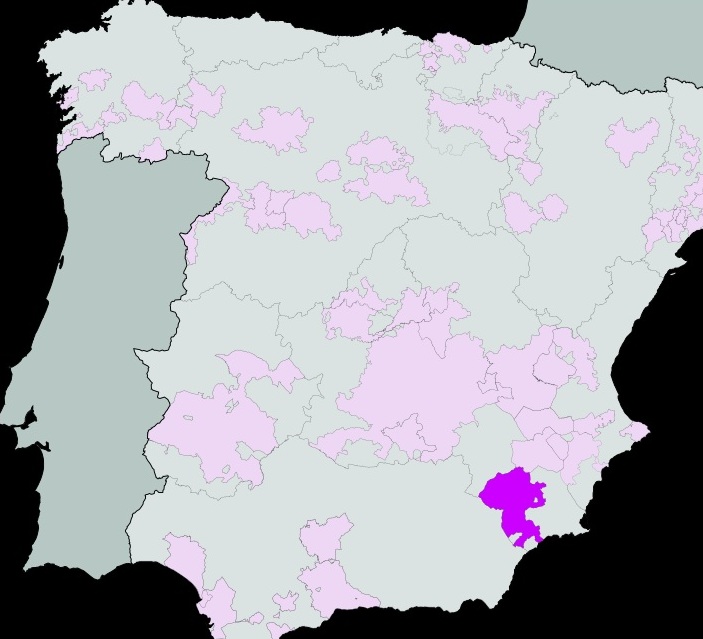
DO Bullas is the youngest and most mountainous wine appellation in Murcia.
It is located in the rugged northwest corner of the province and is famously known for producing a cooler, more elegant, and mineral-driven style of Monastrell compared to its lowland neighbors like Jumilla.
The Wines
High-Altitude Monastrell
Much like Jumilla, Monastrell makes up over 80% of the vineyard area.
Thanks to the cooler mountain climate, Bullas reds are highly fresh, floral, and vibrant, showing deep notes of blackberry and wild Mediterranean herbs.
Fresh Rosés
An impressive 70% of the region's production is actually dedicated to bright, crisp rosé wines, primarily crafted from Monastrell grapes.
Blends
Winemakers frequently blend Monastrell with Tempranillo, Syrah, and Cabernet Sauvignon.
Whites
Small quantities of aromatic white wines are made using Macabeo and Sauvignon Blanc.
Terroir & Mountain Climate
The vines grow on brown, limestone-heavy soils that can be so hard they must be mechanically broken before planting.
Cool Sierra Influence
Vineyards are planted at very high elevations ranging from 400 to 900 meters above sea level. This altitude brings cool mountain air that allows the grapes to retain high acidity and fresh fruit flavors.
Extreme Temperature Shifts
While the region gets plenty of Mediterranean sunshine, day-to-night temperatures can swing by up to 20°C, developing complex grape flavors.
DO Yecla
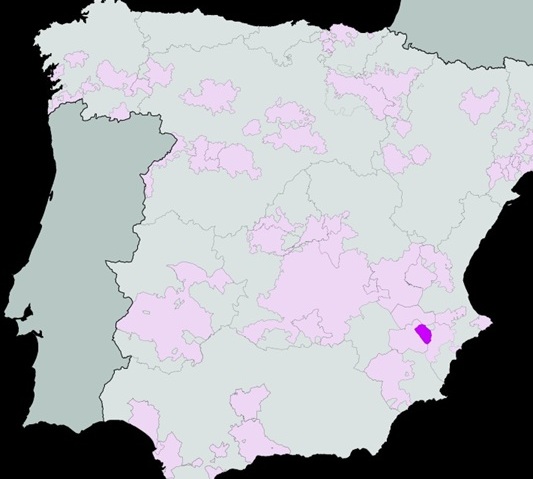
DO Yecla is located on the northern tip of the Murcia province.
DO Yecla is one of Spain’s smallest and most unique wine zones. Its official borders are matching the municipal boundaries of the town of Yecla itself.
DO Yecla is globally celebrated as a powerhouse for intense, fruit-forward Monastrell (Mourvèdre).
The region sells up to 95% of its wine production abroad, making it a massive player on the export market.
The Wines
Monastrell Dominance
Monastrell accounts for 85% of all vineyard plantings.
Monastrell produces deeply colored, full-bodied red wines with flavors of ripe dark fruits, licorice, and rich spices.
Ungrafted Old Vines
Because its sandy soils naturally resisted the devastating 19th-century phylloxera root epidemic, Yecla is a rare treasure trove for centuries-old, ungrafted vines that yield deeply complex, concentrated wines.
Modern Blends
Monastrell is the king, but local winemakers frequently build complexity by blending it with Syrah, Cabernet Sauvignon, Merlot, and Garnacha.
Terroir & Climate
DO Yecla is divided geographically into two sub-zones:
1. Campo Arriba (High Field)
Located in the north at altitudes up to 800–900 meters.
Stony, limestone-heavy soils yield grapes with a high extract, creating the region's most premium, structured reds.
2. Campo Abajo (Low Field)
Located in the south at lower altitudes (around 500 meters).
Has sandier soils that produce lighter, highly aromatic, and easily approachable everyday wines.
Harsh Continental Climate
The vines in DO Yecla endure extreme weather, with long, freezing winters and blistering summer days reaching 40°C.
Very low annual rainfall forces the roots to dive incredibly deep into the limestone subsoil to survive.