Marlborough (South Island)
Located at the northeastern tip of the South Island, Marlborough is the largest and most famous wine region in New Zealand.
Marlborough is primarily known for its world-class Sauvignon Blanc, characterized by its vibrant tropical fruit flavors and crisp acidity.
The first plantings was in 1973 by Montana Wines (now Brancott Estate). In the 1980s, Marlborough Sauvignon Blanc burst onto the international scene. The region has since become a benchmark for cool-climate Sauvignon Blanc.
Marlborough now includes over 500 growers and 140+ wineries, and counts for over 70% of New Zealand's total vineyards.
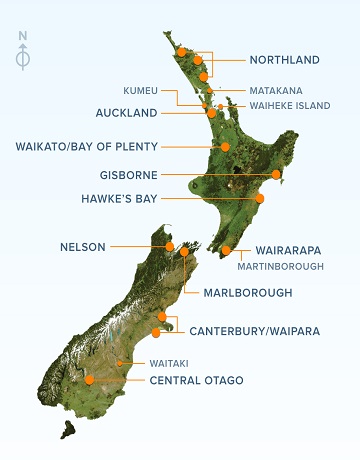
Statistics, maps and images credit: New Zealand Wine
Key Grapes
| Sauvignon Blanc | 25,200 |
| Pinot Noir | 2,500 |
| Pinot Gris | 1,250 |
| Chardonnay | 1,100 |
Sauvignon Blanc
Marlborough Sauvignon Blanc set the standard for the varietal globally in the 1980s.
It is a global icon, recognized for its zesty acidity, intense tropical and citrus fruit, and vibrant herbal character.
The style is crisp, aromatic, with flavors of gooseberry, passionfruit, grapefruit, lime zest, and sometimes jalapeño or fresh-cut grass.
Vibrant, clean, and high-acid, most often produced in stainless steel to preserve freshness, but blends or oak-aged versions (Fumé Blanc) are emerging.
Pinot Noir
Pinot Noir is the second-most important variety in Marlborough.
The style is light to medium-bodied with red cherry, plum, and earthy spices.
It is especially suited to the Southern Valleys, where clay soils add the neccessary depth and structure.
Quality is increasing , with single-vineyard and reserve labels now common.
Pinot Gris
Marlborough Pinot Gris is vibrant and aromatic with flavors of ripe pear, green apple, and stone fruit, hints of quince, citrus, and floral or mineral notes.
It is richer and more complex than Italian Pinot Grigio, and often off-dry with a refreshing finish.
Chardonnay
Styles range from crisp and unoaked to rich and barrel-fermented. Often shows well-structured stonefruit and citrus with excellent intensity and complexity.
Some are lean and mineral, others are rich and creamy depending on oak use. Most winemakers focus on texture and complexity.
Aromatic Whites
Riesling, and Gewürztraminer are also grown here, but in smaller quantities.
The Riesling can be made in dry to sweet styles, showcasing lime, honeysuckle, and high acidity.
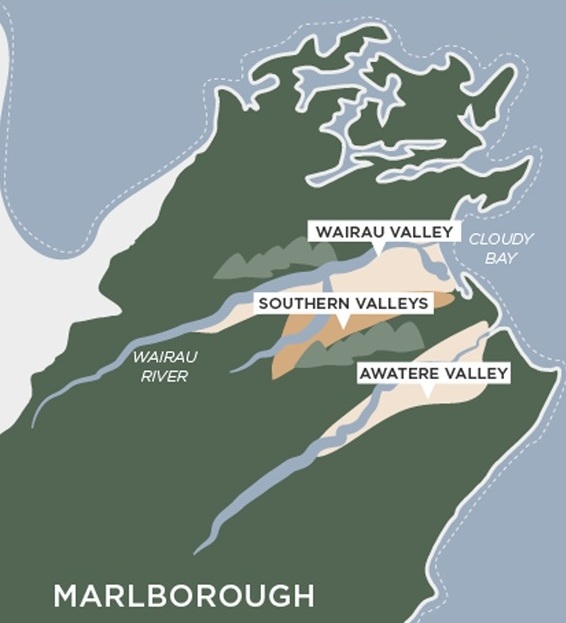
Wine Regions
Wairau Valley
- Warmest and sunniest sub-region
- Gravelly soils, alluvial fans
- Known for fruit-driven Sauvignon Blanc and aromatic whites
Southern Valleys
- Rolling hills with clay-rich soils
- Cooler and slower-ripening, ideal for structured Pinot Noir
- Also good for Chardonnay and other aromatics
Awatere Valley
- More extreme: windier, cooler, drier
- Sauvignon Blanc is more herbaceous, with higher acidity
- Increasing reputation for Pinot Noir
Climate
Marlborough has a cool to moderate maritime climate:
- Long sunny days
- Cool nights
This significant diurnal temperatures variation enhances the aromatic development and the acidity retention in the grapes.
The region has low rainfall during the ripening and harvest season (ideal for disease control).
Soils
The soil is mostly free-draining alluvial soils with gravel and sand over clay or silt loams.
Wairau Valley
gravelly and stony - ideal for aromatic whitesAwatere Valley
drier, windier, and cooler - more herbaceous winesSouthern Valleys
more clay-rich soils - good for Pinot Noir
Outlook
- Continued dominance in export markets, especially with Sauvignon Blanc.
- Expanding focus on premium Pinot Noir and Chardonnay.
- Growing interest in diversity of styles: oaked Sauvignon Blanc, pét-nats, organic wines.
- Efforts to differentiate sub-regional identity will likely become more important.