Limestone
Limestone are sediments of Calcium Carbonates from organic matter like Fossils and Shells.

Famous Limestone Buildings:
- Sphinx of Giza
- The Great Pyramids
- The Parthenon, Greece
- The Colosseum, Rome
- The Empire State Building, New York
Calcium Carbonate
- Calcium Carbonate (CaCO3) is a chemical compound found in rocks like limestone, chalk, and marble, and in marine life structures such as shells, pearls, and coral, as well as eggshells.
- In Rocks: Limestone, Chalk, Marble, and Travertine.
- In Marine Life: Shells, clams, snails, oysters, coral skeletons, and pearls.
- In Caves: Stalactites and stalagmites are formed from calcium carbonate deposits.
Different Limestone Types
Limestone is one of the most influential soil types in viticulture.
It is prized for its ability to retain moisture in dry conditions and provide excellent drainage in wet contitions.
Different limestone types impart different properties, affecting water retention, drainage, and mineral content, all of which influence vine health and grape characteristics.
Limestone soil is said to contribute to freshness, minerality, and complexity.
and mineral content, all of which influence vine health and grape characteristics.
Common types of Limestone in vineyards:
- Chalk
- Marl
- Kimmeridgian Limestone
- Calcareous Clay
The presence and proportion of these limestone types contribute to the unique terroir of each vineyard region.
Other types of Limestone in vineyards:
- Dolomitic Limestone
- Jurassic Limestone
- Lithographic Limestone
- Travertine
- Tufa
- Shelly Limeston
- Albariza Limestone
- Portlandian Limestone
Limestone Terroir
Many regions are famous for their specific types of limestone soils, which contribute significantly to the unique characteristics of their wines. The combination of these soil types with the climate, topography, and grape varieties defines the terroir of each region.
Each terroir type imparts properties to the soil, affecting water retention, drainage, mineral content, and influence the vine health and the grape characteristics.
The proportion of each type contributes to the a unique terroir of each vineyard.
Some of the best wines in world grow in limestone soils: Champagne, Chablis, Sancerre, Saint Emilion.
Limestone is good at absorbing water and releasing it slowly to the vine roots when it is needed.
Even if the vine roots cannot penetrate the hard layer of stone, there are deep cracks in the limestone. The vine roots will channel down these crackssearch for water and nutrients and create a deeper root systems.
For premium winemaking, limestone soils are considered a true gem due to water holding in dry weather and drainage in wt weather. The soil reflects sunlight, promotes photosynthesis and increases nutrient exchange between soil and vine. Wines tend to be aromatic and elegant.
Limestone is consistently alkaline and is generally planted with grapes of high acidity levels, creating wines of minerality and acidity.
Limestone Regions
The Paris Basin (Bassin Parisien) is the most famous limestone belt. It runs through the centre of Loire, Burgundy, Champagne, and then to south of England (where the wine industry is beginning to make the most of it).
Grapes:
- Chardonnay
- Pinot Noir
- Sauvignon Blanc
The sedimentary rocks in the Champagne region are 75% limestone.
Saint-Émilion in Bordeaux has a limestone plateau around the town of Saint-Émilion.
Two major types of soil are found in Chablis:
Kimmeridgian limestone is a mix of clay, limestone, and marine fossils.
Portlandian limestone is more limestone and less clay.
The Meursault wine appellation in Bourgogne (Chardonnay, Pinot Blanc, Sauvignon Blanc) has a soil of clay and limestone, with a topsoil of loess and schist.
The Mâconnais wine region in Bourgogne is characterized by limestone hills. The soil is alkaline limestone-based clay with a high content of iron and minerals.
Sussex, Kent and Surrey in England have chalky limestone soils similar to Champagne.
Limestone is the main soil type in the Zinnkoepflé region of Alsace.
Other Regions:
- Jerez (Spain)
- Paso Robles (California, USA)
- Santa Rita Hills (California, USA)
- Robertson Valley (South Africa)
Chalk
Chalk is a soft, white, porous form of Limestone composed of calcium carbonate.

Chalky soils retain moisture well while also providing good drainage, which is beneficial for vine health.
Regions
Champagne in France is renowned for its chalky soils, which provide excellent drainage and moisture retention, essential for producing high-quality Champagne.
Burgundy in France, particularly in Chablis, where Kimmeridgian and Portlandian chalk soils contribute to the distinct minerality of the wines.
Jura in France. Many wines from the Jura region are characterized by their crispness and high acidity, particularly the white wines made in a non-oxidative (ouillé) style and the sparkling Crémant du Jura.
Grapes
- Crisp, high-acid white wines
- Sparkling wines (e.g. Champagne)
- Chardonnay (e.g. Chablis)
Marl
Marl is a mixture of Clay and Calcium Carbonate.
This type of limestone soil can vary greatly in its composition, with some marls being more clay-heavy and others more lime-heavy.
Marl soils are known for their fertility and water retention properties, found in regions like Burgundy and the Loire Valley.
Regions
Burgundy in France, especially in the Côte d'Or region, where it provides a fertile base for Pinot Noir and Chardonnay.
Loire Valley in France, notably in Sancerre, where marl contributes to the flinty, mineral character of Sauvignon Blanc.
Grapes
- Pinot Noir (Burgundy, France)
- Saivignon Blanc (Loire Valley, France)
- Nebbiolo (Barolo, Barbaresco) Piedmonte, Italy
Kimmeridgian Limestone
Kimmeridgian Limestone is ancient fossil-rich and mineral-rich seabed soil mixed with clay and marl.
Regions
- Chablis, France
- Sancerre, France
- Champagne, France
Grapes
- Chardonnay (Chablis)
- Sauvignon Blanc (Sancerre)
- Pinot Noir and Chardonnay (Champagne)
Calcareous Clay
Calcareous Clay (Calcaire Argilo-Calcaire) is a mix of clay and limestone that is calcareous, meaning it contains a significant amount of calcium carbonate.
This type of soil retains moisture well and provides essential nutrients and is common in regions like Chablis and parts of Tuscany.
It combines water retention of clay with minerality of limestone.
Calcareous Clay Regions
Saint-Émilion, Bordeaux, France:
The Limestone Plateau area of Saint-Émilion is known for its clay and limestone, which facilitate the growth of Merlot
and Cabernet Franc. The best Saint-Émilion wines come from this plateau.
Chablis, Burgundy, France:
The Kimmeridgian soils here are a mix of calcareous clay and limestone, crucial for the region's Chardonnay.
Côte-d'Or, Burgundy, France:
This region has highly acclaimed appellations noted for producing some of the world's most exceptional
Pinot Noir on clay-limestone soil.
Rioja and Ribera del Duero, Spain:
The finest Tempranillo vineyards in these regions are planted on limestone-rich clay soils,
which help produce wines with intense fruit and robust tannins.
Piedmont, Italy:
The calcareous-clay soils here are crucial for the cultivation of the Nebbiolo grape, which makes the renowned
and long-lived Barolo and Barbaresco wines.
Chianti, Tuscany, Italy:
The local "Galestro" soil, a marl of clay and limestone, provides the distinctive acidity and tannic structure
to bold Sangiovese wines.
South Tyrol, Italy:
The Appiano area has deep calcareous clay.
Paso Robles, California, USA:
This region has a notable predominance of calcareous soils (Linne Calodo soils) not typical of other Californian areas,
on which high-quality Rhône and Bordeaux varieties like Grenache, Syrah, and Merlot thrive.
Grapes
- Merlot
- Cabernet Franc
- Chardonnay
- Pinot Noir
- Nebbiolo
- Sangiovese
- Tempranillo
- Grenache
Dolomitic Limestone
Dolomitic Limestone contains both calcium carbonate and magnesium carbonate.
It is less common but can be found in regions where magnesium-rich deposits are present.
Dolomitic limestone can influence the mineral content of the grapes.
Regions
Alto Adige in Northern Italy has soils rich in dolomitic limestone, contributing to the unique mineral profile of its wines.
Parts of Burgundy also have deposits of dolomitic limestone.
Jurassic Limestone
Jurassic Limestone is hard and ancient marine limestone from the Jurassic era.
It is often layered, and mixed with marl or clay.
Regions
- Jura, France
- Burgundy, France
Grapes
- Savargin (Jura)
- Chardonnay (Côte de Beaune)
Portlandian Limestone
During the Portlandian age (135 million years ago), the sea level was much higher, terrestrial erosion were rarer and the limestone formed was much harder.
Because of this, Portlandian limestone is not so rich in clay and fossils, and produces wines that are less mineral, but more fruity.
Best known Regions:
- Petit Chablis (Burgundy, France)
Albariza Limestone (Jerez, Spain)
Albariza Limestone has similar characteristics to the soil in Chablis and Champagne.
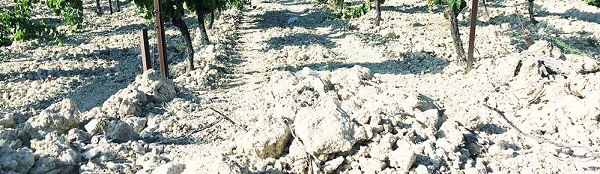
In Jerez, an algae called diatoms, were deposited during the formation of the Guadalquivir river. Later when the seawater receded, the skeletons were deposited, forming the chalky albariza soils which Jerez is known for today.
Albariza soil covers 90% of the Jerez Sherry vineyards. This chalky soil stores the winter rain and distributes the moisture to the vines in the dry season.
Lithographic Limestone
Lithographic Limestone is very fine-grained and hard, often used for detailed lithography prints. It is less porous and less commonly used in viticulture directly, but can be found in some areas.
Regions
Franconia in Germany is known for its dense, fine-grained limestone soils that impact the flavor profile of Silvaner wines.
Southern Burgundy in France have some pockets of lithographic limestone, contributing to the terroir.
Shelly Limestone
Shelly Limestone is composed of broken shell fragments, cemented by calcium carbonate. Shelly limestone can contribute to the drainage and aeration of vineyard soils and is found in regions like Muscadet in the Loire Valley.
Regions
Muscadet, Loire Valley, France:
The presence of shelly limestone in the vineyards contributes to the crisp, mineral quality of the wines.
Coastal regions of Australia:
Certain areas, like Margaret River, have shelly limestone deposits.
Travertine
Travertine is a form of limestone deposited by mineral springs, especially hot springs. It has a fibrous or concentric appearance and can contain high levels of organic material.
Travertine soils are not very common in vineyards but can be found in specific microclimates.
Regions
Central Italy:
Particularly in Tuscany and Umbria, where hot springs have deposited travertine over millennia.
Napa Valley, California:
Some microclimates within Napa may have pockets of travertine deposits.
Tufa
Tufa is a Porous Limestone formed by the precipitation of carbonate minerals from ambient temperature water bodies.
Tufa soils are typically rich in organic material and provide excellent drainage.
Regions
The Loire Valley in France where it produces Cabernet Franc (Chinon, Saumur) and Chenin Blanc.
Confusion
Tufa should not be confused with Tofo or Tufo, a light, porous volcanic rock, creating distinctive mineral-driven wines from regions like Italy's Campania (Greco di Tufo), showcasing unique volcanic soils, minerality, salinity, and terroir expression, often with flinty, fruity, or spicy notes.