Kimmeridgian
In geologic timescale, Kimmeridgian is in the Late Jurassic Epoch between 157 and 149 million years ago.
The Kimmeridgian follows the Oxfordian and precedes the Tithonian.

Kimmeridgian Tyrannosaurus Rex
Kimmeridgian Limestone
Kimmeridgian soil is gray Limestone soil originally identified in Kimmeridge in England.
It is composed of clay and fossilized oyster shells.
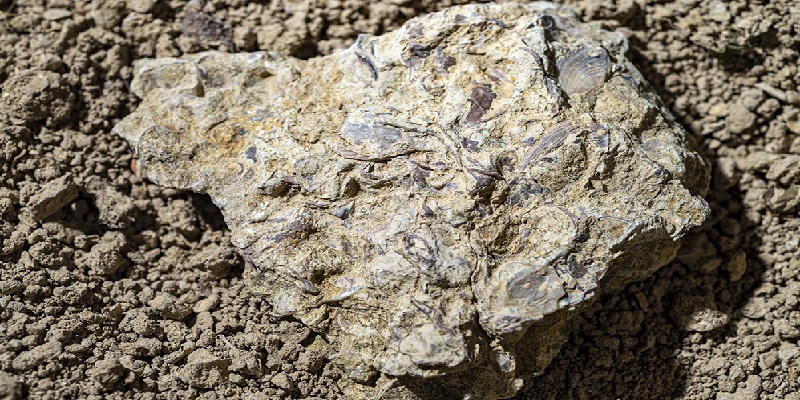
During the Kimmeridgian age (150 million years ago), warm sea led to an accumulation of carbonate deposits mixing with terrestrial erosion elements, such as clay. This explains the presence of marl oyster fossils in Kimmeridgian soils.
Best known Regions:
- Champagne (France)
- Chablis (Burgundy, France)
- Sancerre (Loire, France)
- Pouilly-Fumé (Loire, France)
- Alsace (France)
- Saint-Emilion (Bordeaux, France)
- Toscana (Italy)
- Puglia (Italy)
Kimmeridgian Chablis
In 1904, Professor Georges Chappaz found tiny comma-shaped oyster fossils (Exogyra Virgula) in the subsoil of Chablis (france). Forming banks of limestone, these fossilized shellfish from the Jurassic era are combined with gray marl, a lime rich mudstone. Chappaz classified this as Kimmeridgean soil (from Upper Jurassic era 145 million years ago), observed for the first time in Kimmeridge in England.
The oldest soils in Chablis are Kimmeridgian. They contain the highest degree of mineral-rich clay with marine fossils resulting in high chalky content. The "minerality" of Chablis wines has traditionally been linked to Kimmeridgian soils. Most of Chablis’ vine growers agree that the "mineral" component of their resulting wine is related to the Kimmeridgian soils and its interaction with the Chardonnay grape.
Chablis' Grand Cru vineyards and Premier Cru vineyards are planted on Kimmeridgean soil, while Petit Chablis appellations are mainly grown on Portlandian soils (see below).
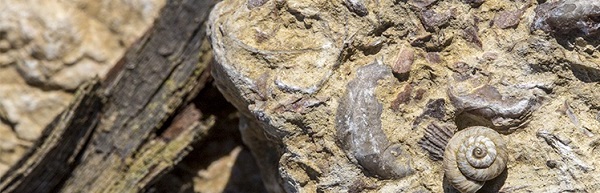
Fossils in the Kimmeridgiean subsoil of Chablis.
Kimmeridgian Marl
Kimmeridgian Marl is calcareous clay with Kimmeridgian limestone.
The rock comes from the sea, and is rich in fossilized Oysters.
While working in Dorset near the town of Kimmeridge in the south of England, French geologist Alcide d'Obigny, identified a unique layer of dark marl which he named Kimmeridgian. The layer runs from the North Sea to the Paris Basin.
Terres Blanches
Kimmeridgian marl forms the bedrock of the Centre-Loire's wine regions. Locally, the soil is known as terres blanches (white earth).
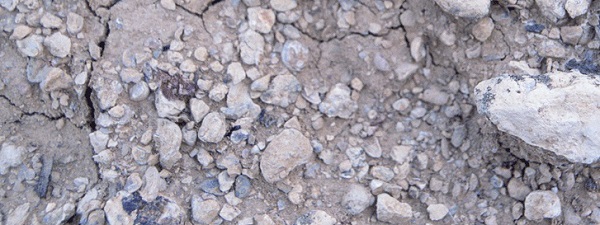
Terreblanche in Sancerre.
Terres Blanches is considered a good "late-ripening" terroir. It is made of thick clay layers covered with flat limestone stones, rich in fossils, that have the particularity of whitening while drying in the sun. The terroir gives a strong aromatic concentration, tension and ageing potential to the wines.