Clay
Clay have fine particles and is known to hold water longest of all soil types.
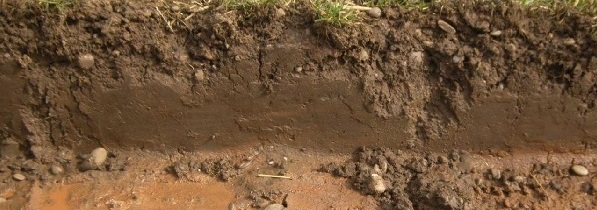
Clay holds onto nutrients effectively, and due to the water retention, clay is less susceptible to drought.
Clay may be prone to compaction, can be challenging for root penetration, and may require soil management practices like aeration.
Clay soils lead to bold full-body wines with intense colors.
Grapes:
- Cabernet Sauvignon
- Sangiovese
- Tempranillo
- Carmenere
- Merlot
Best known Regions:
- Burgundy (France)
- Pomerol (Bordeaux, France)
- St. Emilion (France)
- Barolo (Italy)
- Chanti (Italy)
- Rioja (Spain)
- Ribera del Duero (Spain)
- Hillsides in Napa Valley (USA)
- Barossa Valley (Australia)
Clay-based Soils
Clay based soils are cool in temperature and provide good water retention and drainage.
Calcareous
Calcareous Clay is a mix of clay, limestone and chalk that is calcareous, meaning it contains a significant amount of of calcium and magnesium carbonate.
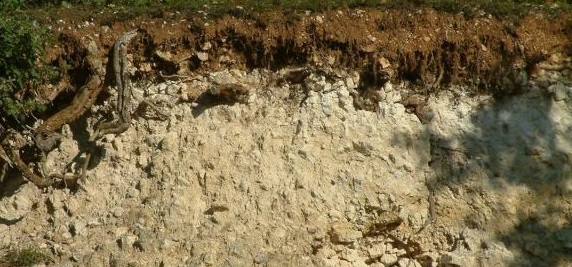
Calcareous clay soils provides good water retention and drainage. They have high limestone content, which neutralizes the acidity (pH) in the soil.
The cool temperatures of the soil normally delay ripening of the grape, which tends to produce more acidic wines.
Grapes:
- Chardonnay
- Pinot Noir
- Grenache
- Syrah
Best known Regions:
- Champagne (France)
- Chablis (Burgundy, France)
- Alsace (France)
- Loire (France)
- Saint-Emilion (france)
- Côtes du Rhône South (France)
- Tuscany (Italy)
Wet Clay
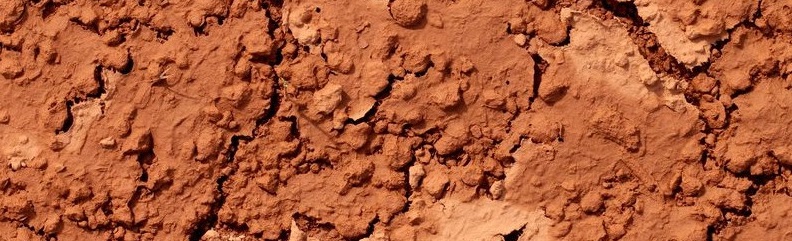
Red Clay
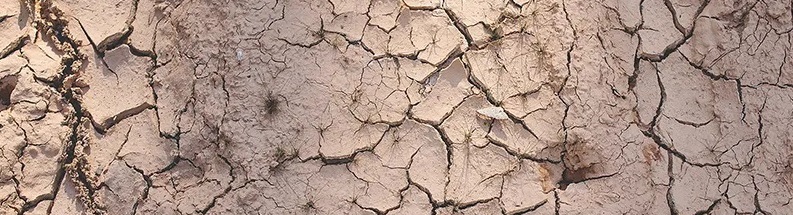
Dry Clay
Clay soils contain more than 30 percent fine clay particles. Some clays swell and shrink as they wet and dry, which can add to soil fertility.
Clay soils take longer to warm up in spring. Wet clay soils are easily damaged when dug or walked on.
Drought is much less damaging on clay soils than others soil types.
Pros:
- Holds water and nutrients the longest of all soil types
- Less susceptible to drought
Cons:
- Prone to compaction
- Callenging for root penetration
- Poor drainage