Wine Pairing
Briscola (Italy)
Briscola is a semi-hard cheese from pasteurized Cow milk.
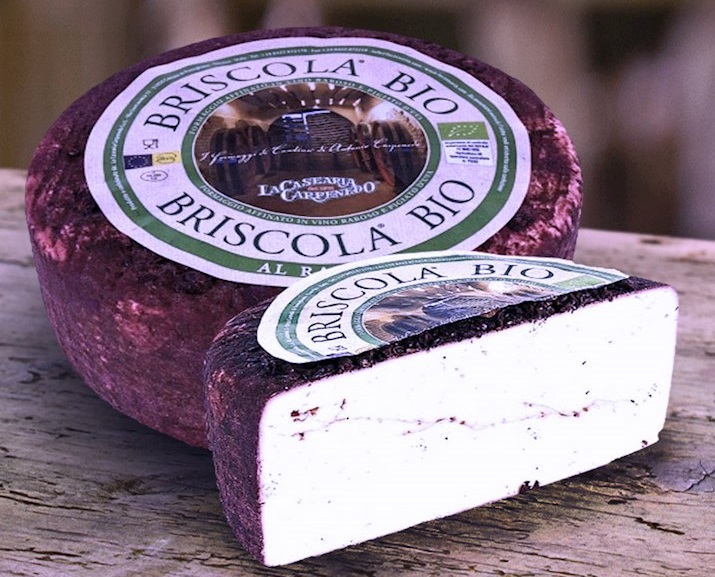
Briscola is an Italian "drunk cheese" from the Veneto region, aged for at least 4 months and by being immersed in Barbera or Raboso wine and grape marc. This process gives it a purple rind and a savory flavor that is slightly spicy, with fruity notes of cherry and pepper.
The best wine pairings for Briscola should either mirror its wine-soaked character or provide a crisp contrast to its rich, cow's milk base.
Red Wine Pairings (Mirroring)
Since the cheese is aged in red wine, choosing a red with similar fruit and spice profiles is a natural match.
Barbera
The most authentic choice, as many versions of Briscola are soaked in this wine. Its high acidity and cherry fruit notes perfectly match the cheese's rind and spicy finish.
Raboso
A traditional regional match from Veneto, mirroring the other wine often used for soaking the cheese.
Nebbiolo
The "earthy" and red fruit notes of a Nebbiolo (like a Langhe Nebbiolo) work well with the hay-like and peppery aromas of the cheese.
White Wine Pairings (Contrasting)
Aromatic or crisp whites can cut through the buttery texture and highlight the "drunk" fruity notes.
Gewürztraminer
The floral and lychee notes can enhance the cherry-like fruity aftertaste of the cheese.
Sauvignon Blanc
The crisp acidity and bright citrus flavors of Sauvignon Blanc can provide a refreshing contrast to the creamy texture of the Briscola. Look for a Sauvignon Blanc with herbaceous notes to enhance the pairing.
Soave Classico
A local white from Veneto with mineral notes and citrus that provides a refreshing, clean contrast to the savory cheese.
Oaked Chardonnay
A full-bodied Chardonnay with buttery notes can match the richness of the cow's milk while adding a layer of nuttiness.
Sparkling Wines
Franciacorta
This Italian sparkling wine, made in the traditional method, offers crisp acidity and elegant bubbles, making it a refreshing and palate-cleansing pairing for Briscola.
Prosecco
With its lively bubbles and flavors of green apple and citrus, Prosecco can provide a delightful contrast to the richness of Briscola.
Moscato d'Asti
A refreshing choice for Briscola. Its light bubbles and low alcohol act as a palate cleanser, while its fruitiness balances the cheese's nutty profile.
Lambrusco
This slightly sparkling red wine from Emilia-Romagna, Italy, offers a touch of sweetness, bright acidity, and fruity flavors that can balance the richness of Briscola while cleansing the palate.
Dessert Wines
Recioto di Soave
An exceptional choice for semi-hard cheeses because it bridges the gap between high-intensity sweetness and structured acidity. Made from dried Garganega grapes in the Veneto region of Italy, this wine is characterized by rich notes of honey, dried apricot, and a distinct toasted almond finish.
Vin Santo
This traditional Italian dessert wine offers honeyed sweetness and flavors of dried fruits and nuts, which can complement the savory and salty notes of Briscola, creating a harmonious pairing.
Marsala
Marsala is a fortified wine from Sicily. It is known for its rich, caramelized flavors. Its sweetness and depth can complement the nutty and slightly sweet profile of Briscola, creating a delightful contrast.
Picolit
A prestigious and rare dessert wine from Friuli, Italy, that acts as a "powerhouse" pairing for semi-hard cheeses due to its intense concentration of sugar and balanced, bright acidity.
Often compared to France's Sauternes, Picolit is a vino da meditazione (meditation wine) with a "velvety" texture and complex notes of acacia honey, dried figs, apricot jam, and orange peel.
Personal Preferences
.jpg)
Enjoy your wine and cheese with local fruits nuts and bread!
Personal preferences play a significant role in wine and cheese pairings, so don't hesitate to experiment to find the combination that suits your taste buds best.
Consider adding some accompaniments like fruit, nuts, or bread to enhance the pairing experience:
- Crusty Bread and Crackers
- Nuts, Peanuts and Fries
- Grapes and Berries
- Olives and Garlic
- Figs and Rasins
- Apple and Honey
- Sliced Pear
- Dark Chocolate
- Rosemary and Thyme

Clara Peeters - Still Life with Cheeses, Almonds and Pretzels 1615
If it Grows Together
If it grows together it goes together.
Pairing locally is a great way to learn more about wine and cheese:
 France
Chèvre from Loire is great with Sauvignon Blanc from Loire.
Munster from Alsace is great with Gewürztraminer from Alsace.
French Sauternes with French Roquefort.
 Italy
Italy
Strong Gorgonzola pairs perfectly with Barolo.
Pecorino pairs well with Chanti.
Pino Grigio goes well with Mozzarella.
 Spain
Spain
Manchego is gorgeous both with Cava and Rioja.
 Alpine
Alpine wines were made with dishes like Raclette in mind.